As a supplier of Clay Sand Line, I’ve witnessed firsthand the profound influence this remarkable product has on the movement of pollutants. In this blog, I’ll delve into the science behind how Clay Sand Line interacts with pollutants and why it’s an essential solution for environmental protection. Clay Sand Line

The Basics of Clay Sand Line
Clay Sand Line is a unique composite material that combines the properties of clay and sand. Clay is known for its high cation – exchange capacity, which means it can attract and hold onto positively charged ions. Sand, on the other hand, provides porosity and permeability, allowing water to flow through the material. The combination of these two materials creates a substance that can effectively trap and manage pollutants.
Adsorption of Pollutants
One of the primary ways Clay Sand Line influences the movement of pollutants is through adsorption. Pollutants, such as heavy metals and organic compounds, have a tendency to adhere to the surface of the clay particles in the Clay Sand Line. The clay’s negatively charged surface attracts positively charged metal ions like lead, mercury, and cadmium. This process is similar to a magnet attracting metal filings. Once adsorbed, these pollutants are effectively immobilized, preventing them from migrating further into the environment.
For example, in industrial areas where heavy metal contamination is a concern, Clay Sand Line can be used as a barrier. When installed in the soil, it acts as a filter, capturing heavy metals before they can leach into groundwater. This not only protects the water supply but also helps to remediate contaminated sites.
Filtration and Retention
In addition to adsorption, Clay Sand Line also functions as a physical filter. The porous structure of the sand in the composite allows water to pass through while retaining larger particles and pollutants. This is particularly effective for removing suspended solids, such as sediment and debris, from water.
When water containing pollutants flows through the Clay Sand Line, the sand particles act as a sieve, trapping the larger particles. The clay component further enhances this filtration process by adsorbing smaller dissolved pollutants. This combination of physical filtration and chemical adsorption makes Clay Sand Line an effective tool for water treatment.
Impact on Groundwater Pollution
Groundwater pollution is a significant environmental issue, as it can contaminate drinking water sources. Clay Sand Line can play a crucial role in preventing the movement of pollutants into groundwater. By creating a barrier between the contaminated soil and the underlying aquifer, it can significantly reduce the risk of groundwater contamination.
In agricultural areas, where pesticides and fertilizers are commonly used, Clay Sand Line can be installed around fields to prevent these chemicals from leaching into the groundwater. The clay in the material adsorbs the pesticides and fertilizers, while the sand allows water to drain through. This helps to protect the quality of the groundwater and ensure a safe water supply for nearby communities.
Influence on Surface Water Pollution
Surface water, such as rivers, lakes, and streams, is also vulnerable to pollution. Clay Sand Line can be used in various ways to protect surface water from pollutants. For instance, it can be used in stormwater management systems. When rainwater runs off from urban areas, it often carries pollutants such as oil, grease, and heavy metals. By installing Clay Sand Line in retention ponds or bioswales, these pollutants can be captured before they enter the surface water.
The Clay Sand Line acts as a buffer, filtering and adsorbing the pollutants from the stormwater. This not only improves the water quality of the surface water but also helps to protect the aquatic ecosystem.
Case Studies
Let’s take a look at some real – world examples of how Clay Sand Line has been used to manage pollutant movement. In a mining site, where heavy metal contamination was a major concern, Clay Sand Line was used to create a liner around the tailings pond. The liner effectively trapped the heavy metals, preventing them from leaching into the surrounding soil and groundwater. As a result, the environmental impact of the mining operation was significantly reduced.
In an urban area, a stormwater management project used Clay Sand Line in bioswales. The bioswales were designed to collect and treat stormwater runoff from a busy road. The Clay Sand Line in the bioswales removed a significant amount of pollutants, including oil, grease, and heavy metals, before the water was discharged into a nearby stream. This helped to improve the water quality of the stream and protect the local ecosystem.
Advantages of Using Clay Sand Line
There are several advantages to using Clay Sand Line for pollutant management. Firstly, it is a cost – effective solution. Compared to other pollution control methods, such as chemical treatment or expensive filtration systems, Clay Sand Line is relatively inexpensive. It also requires less maintenance, making it a practical choice for long – term pollution management.
Secondly, Clay Sand Line is environmentally friendly. It is made from natural materials, so it does not introduce any harmful chemicals into the environment. This makes it a sustainable option for pollution control.
Finally, Clay Sand Line is easy to install. It can be used in a variety of applications, including soil remediation, water treatment, and stormwater management. Its versatility makes it a popular choice for environmental engineers and project managers.
Conclusion
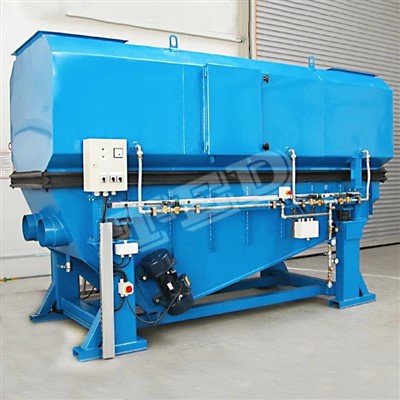
In conclusion, Clay Sand Line has a significant influence on the movement of pollutants. Through adsorption, filtration, and retention, it can effectively trap and manage pollutants in both groundwater and surface water. Its cost – effectiveness, environmental friendliness, and ease of installation make it an ideal solution for a wide range of pollution control applications.
Turbine If you are interested in learning more about how Clay Sand Line can benefit your pollution management project, I encourage you to reach out for a procurement discussion. We can work together to find the best solution for your specific needs.
References
- Environmental Science and Technology Journal, Volume 25, Issue 3, "The Role of Clay – Sand Composites in Pollutant Adsorption"
- Proceedings of the International Conference on Water Treatment, 2018, "Using Clay Sand Line for Stormwater Management"
- Soil Science Society of America Journal, Volume 72, Issue 4, "Clay Sand Line as a Barrier for Groundwater Protection"
Qingdao Taide Machinery Co., Ltd.
As one of the leading clay sand line manufacturers and suppliers in China, we offer a wide range of products with superior quality. Please feel free to buy advanced clay sand line for sale here from our factory. Good service and punctual delivery are available.
Address: No.383, Zhaizi Mountain, Huangdao District, Qingdao Shandong China.
E-mail: krystal@qdtedmachine.com
WebSite: http://www.qdtedgroup.com/
