In the dynamic landscape of the textile industry, traditional textile machinery has long played a pivotal role in shaping the way fabrics are produced. As a seasoned supplier of textile machinery, I’ve witnessed firsthand the evolution of this sector. While traditional textile machinery has been the backbone of the industry for centuries, it’s essential to recognize its limitations in the face of modern challenges and technological advancements. Textile Machinery
1. Limited Precision and Consistency
One of the primary limitations of traditional textile machinery lies in its ability to achieve high levels of precision and consistency. In the production of textiles, even the slightest variation in thread tension, stitch length, or dye application can significantly impact the quality of the final product. Traditional machinery often relies on mechanical components and manual adjustments, which are prone to human error and wear and tear over time.
For instance, in weaving machines, the shuttle mechanism used to carry the weft thread across the warp threads is a mechanical process that can introduce inconsistencies in the fabric’s structure. The speed and force of the shuttle can vary, leading to unevenness in the weave and potential defects such as slubs or broken threads. Similarly, in dyeing processes, traditional dyeing machines may struggle to maintain a consistent temperature and dye concentration, resulting in color variations across the fabric.
2. Low Production Speed and Efficiency
Another significant limitation of traditional textile machinery is its relatively low production speed and efficiency. In today’s fast-paced global market, manufacturers are constantly under pressure to increase productivity and meet tight deadlines. Traditional machinery, however, is often designed for batch production and is not well-suited for high-volume, continuous manufacturing.
For example, traditional spinning machines operate at a slower speed compared to modern automated spinning systems. The manual processes involved in feeding the raw materials, adjusting the spinning parameters, and winding the yarn can be time-consuming and labor-intensive. This not only limits the overall production capacity but also increases the cost per unit of production.
In addition, traditional machinery often requires frequent maintenance and downtime for repairs, which further reduces its efficiency. The mechanical components of these machines are subject to wear and tear, and breakdowns can occur unexpectedly, leading to production delays and increased costs.
3. Lack of Flexibility and Adaptability
Traditional textile machinery is typically designed for specific types of fabrics and production processes. This lack of flexibility and adaptability can be a significant drawback in a rapidly changing market where consumer preferences and fashion trends are constantly evolving.
For instance, if a manufacturer wants to switch from producing a particular type of fabric to a different one, they may need to invest in new machinery or make significant modifications to their existing equipment. This can be a costly and time-consuming process, especially for small and medium-sized enterprises.
Moreover, traditional machinery may not be able to accommodate new materials or production techniques. As the demand for sustainable and high-performance textiles grows, manufacturers need machinery that can handle a wider range of fibers, such as natural fibers, synthetic fibers, and blends. Traditional machinery may not have the necessary capabilities to process these new materials effectively.
4. High Energy Consumption and Environmental Impact
Traditional textile machinery is often energy-intensive and has a significant environmental impact. The use of fossil fuels, such as coal and oil, to power these machines contributes to greenhouse gas emissions and air pollution. In addition, the water consumption and chemical usage associated with traditional textile processes can have a negative impact on the environment.
For example, in the dyeing and finishing processes, large amounts of water are used to rinse and treat the fabrics. This water is often contaminated with dyes, chemicals, and heavy metals, which can pollute water sources and harm aquatic life. Traditional machinery also requires a significant amount of energy to operate, which contributes to the overall carbon footprint of the textile industry.
5. Difficulty in Automation and Integration
In the era of Industry 4.0, automation and integration are key drivers of efficiency and competitiveness in the manufacturing sector. However, traditional textile machinery is often difficult to automate and integrate with other systems.
The mechanical nature of traditional machinery makes it challenging to implement advanced automation technologies, such as robotics and artificial intelligence. These machines typically rely on manual operation and control, which limits their ability to adapt to changing production requirements and optimize the manufacturing process.
In addition, traditional machinery may not be compatible with modern information technology systems, such as enterprise resource planning (ERP) and manufacturing execution systems (MES). This makes it difficult to collect and analyze data from the production process, which is essential for improving efficiency, quality, and productivity.
Overcoming the Limitations
Despite these limitations, there are several ways to overcome the challenges associated with traditional textile machinery. One approach is to invest in modern, advanced machinery that offers higher precision, speed, flexibility, and energy efficiency. These machines are often equipped with advanced automation technologies, such as sensors, actuators, and control systems, which can improve the quality and consistency of the production process.
Another approach is to retrofit existing traditional machinery with modern components and technologies. This can help to improve the performance and efficiency of the machinery without the need for a complete replacement. For example, adding sensors and control systems to a traditional weaving machine can help to monitor and adjust the weaving process in real-time, improving the quality and consistency of the fabric.
In addition, manufacturers can adopt sustainable practices and technologies to reduce the environmental impact of their operations. This can include using renewable energy sources, such as solar and wind power, and implementing water-saving and waste reduction measures.
Conclusion

As a textile machinery supplier, I understand the importance of addressing the limitations of traditional textile machinery in order to meet the evolving needs of the industry. While traditional machinery has served the industry well for many years, it’s clear that the future lies in modern, advanced technologies that offer higher precision, speed, flexibility, and energy efficiency.
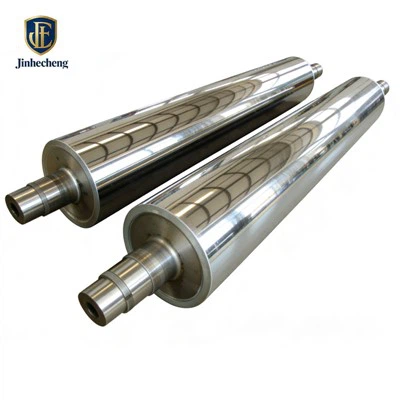
Chrome Plated Rollers By investing in modern machinery, retrofitting existing equipment, and adopting sustainable practices, manufacturers can overcome the limitations of traditional textile machinery and stay competitive in the global market. If you’re interested in learning more about our range of textile machinery solutions or discussing how we can help you address the challenges of your production process, please don’t hesitate to contact us. We look forward to working with you to achieve your manufacturing goals.
References
- Smith, J. (2018). Textile Machinery: A Comprehensive Guide. New York: Wiley.
- Jones, A. (2019). The Future of Textile Manufacturing: Trends and Technologies. London: Routledge.
- Brown, C. (2020). Sustainable Textile Production: Challenges and Opportunities. Berlin: Springer.
Qingdao Jinhecheng Machinery Co., Ltd.
Address: Aishan Industrial Park, Yanghe Town, Jiaozhou, Qingdao City, Shandong Province
E-mail: alice@jhcroller.com
WebSite: https://www.jhcroller.com/
