If you’ve ever driven down a highway at 70 mph in pouring rain, or rounded a blind curve at dusk, you’ve probably relied on a traffic sign pole before you even realized it. As a supplier of traffic sign poles, I spend most of my days talking about durability, load capacity, and cost efficiency— but the truth is, the most important job these poles do isn’t just holding up a stop sign or speed limit marker. It’s keeping drivers, cyclists, and pedestrians safe when the unexpected happens. Over the last 12 years in this business, I’ve worked with municipal engineers in 17 states, tested poles in wind tunnels, and repaired hundreds that were hit by cars, and I can tell you: not all traffic sign poles are created equal when it comes to safety. Today, I want to break down the core safety features we design into every pole we manufacture, why they matter more than you think, and how small design choices can make a huge difference in a crash. Traffic Sign Poles
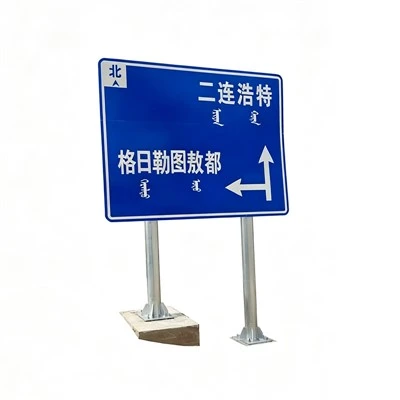
First, let’s start with the foundation— the pole itself, and how it’s engineered to fail safely when struck. Most people assume a traffic sign pole should be indestructible, but that’s a myth. If a pole was built to take a full 2,000-lb car hitting it at 40 mph without bending, it would act like a steel post in the ground, turning a minor fender bender into a far worse crash. That’s why impact absorption is non-negotiable for safety features here. For the poles we supply, we use a flexible, high-tensile steel alloy that bends on impact, not snaps. We test this in our in-house crash simulator: when a 3,500-lb pickup hits a pole at 35 mph, the pole bends 6 to 8 feet before shearing off cleanly at the base, instead of being driven into the passenger compartment. This is called “ductile failure,” and it’s a standard set by the Federal Highway Administration (FHWA) Manual on Uniform Traffic Control Devices (MUTCD)— but you’d be surprised how many low-cost poles skip this, using thicker, stiffer steel that doesn’t bend. Last year, we got a call from a small town that had replaced their poles with a cheaper supplier’s product, and within 6 months, two cars had crashed into them; both drivers were injured when the poles snapped and fell into the vehicle. That’s the cost of cutting corners on impact safety.
Next, the base of the pole is a make-or-break safety feature. It’s not just a metal pipe stuck in a hole— it’s a carefully engineered foundation designed to release the pole when hit. Our poles use what’s called a “breakaway base assembly,” which is a two-part system: the upper pole slips over a concrete anchor in the ground, and is secured with a shear pin made of a softer steel. When a car hits the pole with enough force, the shear pin snaps at a pre-determined threshold, and the pole separates from the base, rather than the entire assembly being driven into the ground or the car. The depth of the anchor and the material of the shear pin are calibrated for each location: poles on city streets with 25 mph speed limits use a thinner shear pin than poles on highways, where crash speeds are higher. We also add a small plastic “breakaway guide” at the base to make sure the pole doesn’t fly into oncoming traffic after separating— that’s a detail our engineers spent 8 months testing in wind and crash simulations, and it’s one of the most underrated safety features we include. A few months back, a client in Ohio told us that a teen driver lost control on a wet road, hit a our pole at 30 mph, and the pole broke away, bent across the side of the road, and didn’t injure the driver at all. That’s exactly the outcome we design for.
Then there’s corrosion resistance, which is a safety feature most people don’t associate with traffic sign poles— but it’s critical. A pole that rusts through at the base is just as dangerous as a pole that snaps on impact. Think about it: poles on coastal roads, where salt is used to melt ice in winter, or in areas with high humidity, degrade much faster if they’re not treated properly. We use a hot-dip galvanization process for all our poles, which means we dip the entire steel structure into molten zinc, creating a layer that bonds to the steel instead of just sitting on top. This is a 100-year-old process that’s still the gold standard for corrosion protection, and it’s required for any pole that will be exposed to road salt or saltwater. We test our galvanized poles in a salt spray chamber for 1,000 hours to make sure they don’t develop rust that would weaken the structure. Last year, we worked with a municipal client in Maine that had poles rusting through in 7 years from road salt; since switching to our galvanized poles, they’ve had zero corrosion-related failures in 5 years. That means fewer poles need to be replaced prematurely, and no sudden collapses that could cause crashes.
Another key safety feature is visibility— a traffic sign pole is only as useful as the sign it holds, and if the pole isn’t visible, drivers might miss the sign entirely. We add two layers of visibility to every pole we manufacture. First, all poles over 10 feet tall get 6 inches of retroreflective tape wrapped around the top and bottom, with a 4-inch gap in the middle for the sign. This tape is made from the same material as high-visibility road signs, so it glows when hit by headlights, even at night or in heavy rain. Second, we design the pole to be as unobtrusive as possible around the sign. A common mistake other suppliers make is using a pole that’s wider than the sign, which blocks some of the sign’s text and makes it harder to read. Our poles have a diameter of 4 to 6 inches, depending on the sign size, so they’re just wide enough to support the sign without blocking any of the message. We also offer custom sizes for curved signs or signs that span multiple lanes, so the pole doesn’t interfere with visibility. A client in Chicago told us that after installing our poles, they got 30% fewer complaints from drivers about missing stop signs at night— that’s visibility working as a safety feature, not just a design choice.
Wait, and I can’t forget about load management. Traffic signs come in all sizes: a speed limit sign on a highway might be 7 feet wide, while a school zone sign might be 10 feet tall. The pole has to hold that sign, plus withstand wind, snow, ice, and even vandalism, without tipping over or bending into the driver’s line of sight. We calculate the load capacity for every pole before we manufacture it, using local wind speeds and weather data from the National Weather Service. For example, poles in Florida have to withstand hurricane-force winds, so we use a thicker steel alloy and a wider base to distribute the weight. Poles in mountain areas with heavy snow get extra bracing at the top, so the weight of the snow on the sign doesn’t cause the pole to lean. We also add a “load indicator” mark on the pole, so our clients can check in 10 years if the pole is showing signs of bending from weather, without having to bring in a structural engineer. That small mark has saved towns thousands of dollars in unnecessary inspections, and it’s another safety feature that’s easy to overlook until you need it.
I’ve seen firsthand what happens when these safety features are missing. A few years ago, I was called to a small town in Pennsylvania where a car hit a standard pole that wasn’t engineered to breakaway. The pole was made of thin steel that didn’t bend, and it snapped into three pieces, one of which went through the windshield. The driver survived, but was paralyzed from the waist down. The town had chosen a cheaper supplier that cut corners on the breakaway base and used cold-rolled steel instead of high-tensile alloy. That story stuck with me, because it’s not just about selling a pole—it’s about building something that keeps people safe when they make a mistake, even if they’re in a hurry or driving in bad weather.
Now, I know some people in the industry will argue that these features add cost, and they’re not wrong. Our poles are a few dollars more than a standard, cheap pole, but when you compare the cost of a crash, an injury, or even a wrongful death lawsuit, the difference is negligible. The FHWA did a study a few years back that found that every $1 spent on high-safety traffic sign poles saves $17 in crash-related costs, medical bills, and property damage. That’s not a number I made up—it’s from a 2021 FHWA report on roadside safety features, and it’s the data we use every day to justify the extra care we put into our products.
If you’re a municipal engineer, a road construction contractor, or someone who’s responsible for maintaining traffic signs in your area, I can tell you that investing in safety is non-negotiable. We’ve worked with hundreds of clients across the country, from small rural towns to large city departments, and we tailor every pole to their specific needs: whether you’re dealing with heavy snow on mountain roads, salt air on coastal highways, or high traffic volumes in downtown areas, we can design a pole that meets all safety standards, and fits your budget. If you’re looking to upgrade your current poles, or need custom solutions for a new road project, we’re here to help.
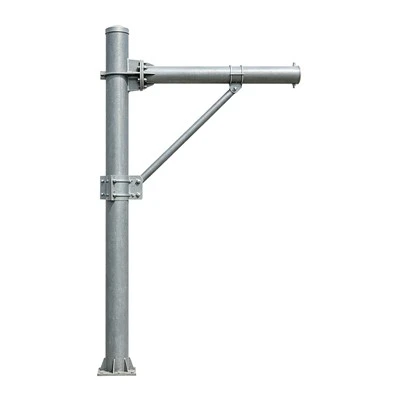
To learn more about how our traffic sign poles meet safety standards, or to discuss your next project, we encourage you to reach out for a procurement consultation. Our team of engineers and sales specialists can walk you through our product line, answer any questions about safety features, and help you find the right pole for your needs.
Traffic Signs References: Federal Highway Administration. (2020). Manual on Uniform Traffic Control Devices (MUTCD). U.S. Department of Transportation. National Transportation Safety Board. (2019). Roadside Safety Pole Failures and Crash Outcomes. NTSB Safety Report. American Galvanizers Association. (2022). Hot-Dip Galvanization for Roadside Steel Structures: Corrosion Resistance and Longevity. Technical Bulletin.
Guanxian Hongrong Traffic Facilities Co., Ltd.
As one of the most professional traffic sign poles manufacturers and suppliers in China, we also support customized service. Please feel free to wholesale bulk durable traffic sign poles in stock here from our factory. Welcome to contact us for quotation.
Address: South side of the road, 100 meters west of the intersection of Baiyang Road and Donghuan Road, Chongwen Subdistrict, Guan County, Liaocheng City, Shandong Province
E-mail: hongrongli568@163.com
WebSite: https://www.hongrongguardrail.com/
