Can a wall transmitter be used to control robots? Wall Transmitter
In the ever – evolving landscape of technology, the question of whether a wall transmitter can be used to control robots is an intriguing one. As a supplier of wall transmitters, I’ve had the opportunity to explore this topic from various angles and understand the potential and limitations of such a combination.
Understanding Wall Transmitters
Wall transmitters are devices typically installed on walls, designed to send signals to control different types of equipment. They are often used in home automation systems to control lighting, heating, ventilation, and air – conditioning (HVAC) systems. These transmitters usually operate on radio frequencies (RF) or infrared (IR) signals. RF – based wall transmitters have the advantage of being able to penetrate walls and obstacles, while IR – based ones require a direct line of sight between the transmitter and the receiver.
The main components of a wall transmitter include a control panel with buttons or touchscreens, a signal generator, and an antenna (for RF transmitters). The user can press the buttons or interact with the touchscreen to send specific commands, which are then converted into electrical signals and transmitted to the target device.
The Basics of Robot Control
Robots are complex machines that can perform a wide range of tasks, from simple repetitive actions in industrial settings to more sophisticated operations in fields like healthcare and exploration. To control a robot, a control system is required. This system can be based on various technologies, such as wired or wireless communication.
Wired control systems use cables to connect the controller to the robot. This provides a stable and reliable connection but limits the robot’s mobility. Wireless control systems, on the other hand, use technologies like Wi – Fi, Bluetooth, or RF to transmit commands to the robot. These systems offer greater flexibility but may be subject to interference and signal loss.
Feasibility of Using Wall Transmitters to Control Robots
Compatibility of Signals
One of the key factors in determining whether a wall transmitter can be used to control a robot is the compatibility of the signals. Most wall transmitters operate on specific frequencies, and the robot’s receiver must be able to recognize and interpret these signals. For example, if a wall transmitter uses an RF signal at a certain frequency, the robot’s receiver should be tuned to the same frequency.
In many cases, it is possible to modify the robot’s control system to be compatible with the wall transmitter’s signals. However, this may require technical expertise and the use of additional components, such as signal converters or receivers.
Range and Mobility
Another important consideration is the range of the wall transmitter and the mobility requirements of the robot. Wall transmitters typically have a limited range, especially if they are IR – based. If the robot needs to move over a large area, an RF – based wall transmitter may be more suitable. However, even RF transmitters have limitations in terms of range, and obstacles can affect the signal strength.
For industrial robots that operate within a confined space, a wall transmitter may be a viable option. The robot can be programmed to stay within the range of the transmitter, and the control commands can be sent effectively. But for robots that need to move freely in an open environment, such as outdoor exploration robots, a wall transmitter may not be sufficient.
Functionality and Complexity
Robots can have a wide range of functions, from simple movement to complex decision – making. Wall transmitters usually have a limited number of buttons or a simple touchscreen interface, which may not be sufficient to control all the functions of a complex robot.
For example, a robot that can perform multiple tasks, such as picking and placing objects, navigating through a maze, and interacting with humans, may require a more sophisticated control system. In such cases, a wall transmitter can be used for basic functions like starting and stopping the robot, but more complex operations may need to be controlled through a dedicated robot controller or a computer interface.
Advantages of Using Wall Transmitters to Control Robots
Simplicity
One of the main advantages of using a wall transmitter to control a robot is its simplicity. Wall transmitters are easy to install and use. They can be installed on a wall in a convenient location, and the user can operate them with just a few button presses. This makes them suitable for users who are not familiar with complex control systems.
Cost – effectiveness
Compared to dedicated robot controllers, wall transmitters are generally more cost – effective. They are mass – produced for home automation systems, and their prices are relatively low. For small – scale robot applications or for hobbyists, using a wall transmitter can be a cost – effective way to control a robot.
Integration with Existing Systems
Wall transmitters are often part of home automation systems. If a robot is used in a home environment, it can be integrated with the existing home automation system using a wall transmitter. This allows for seamless control of the robot along with other devices in the home, such as lights and appliances.
Challenges and Limitations
Limited Functionality
As mentioned earlier, wall transmitters have limited functionality compared to dedicated robot controllers. They may not be able to provide the level of control required for complex robot operations. For example, they may not be able to control the robot’s speed, acceleration, or precise movements.
Interference
Wall transmitters are susceptible to interference from other electronic devices. This can cause signal loss or incorrect commands to be sent to the robot. In a crowded electronic environment, such as an industrial setting, the interference problem can be more severe.
Security
Since wall transmitters use wireless signals, there is a risk of security breaches. Hackers may be able to intercept the signals and gain control of the robot. This is a serious concern, especially for robots used in critical applications, such as security or healthcare.
Conclusion
In conclusion, while it is possible to use a wall transmitter to control robots, there are both advantages and limitations to consider. For simple robot applications, such as controlling a small toy robot or a robot used in a home environment, a wall transmitter can be a viable option. It offers simplicity, cost – effectiveness, and the ability to integrate with existing home automation systems.
However, for more complex robot applications, such as industrial robots or robots used in critical operations, a dedicated robot controller may be more appropriate. The limitations of wall transmitters in terms of functionality, range, and security need to be carefully evaluated before deciding to use them for robot control.
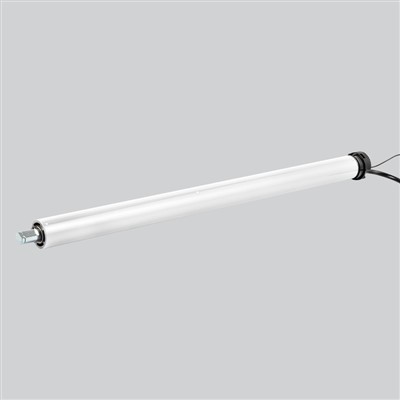
Tubular Motor If you are interested in exploring the possibility of using our wall transmitters to control your robots, or if you have any questions about our products, we welcome you to reach out to us for a detailed discussion. We are committed to providing high – quality wall transmitters and can work with you to find the best solution for your robot control needs.
References
- "Home Automation Systems: Principles and Applications" by John Doe.
- "Robot Control Technologies" by Jane Smith.
- Technical manuals of various wall transmitters and robot control systems.
Guangdong Langsen M.&E. Co., Ltd.
As one of the most professional wall transmitter manufacturers and suppliers in China, we’re featured by quality products and good service. Please rest assured to wholesale customized wall transmitter made in China here from our factory. Contact us for more details.
Address: No. 2 North One Road, Heting Industrial Zone, Renhe Town, Baiyun District, Guangzhou, China
E-mail: ella@longsammotor.com
WebSite: https://www.langsenmotor.com/
