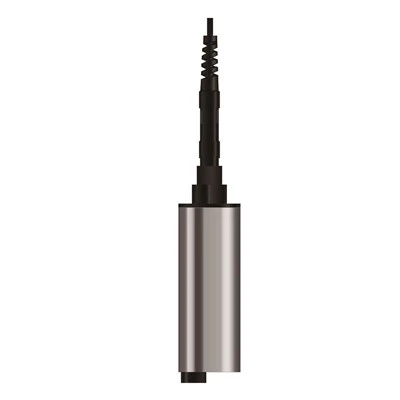
As a supplier of COD sensors, I often encounter questions from customers about the measurement error of these sensors. Chemical Oxygen Demand (COD) is a crucial parameter in water quality assessment, representing the amount of oxygen required to chemically oxidize the organic matter in water. Understanding the measurement error of COD sensors is essential for ensuring accurate and reliable water quality data. COD Sensors
Sources of Measurement Error
1. Sensor Calibration
Calibration is a fundamental step in ensuring the accuracy of COD sensors. If a sensor is not calibrated correctly, it can lead to significant measurement errors. Calibration involves comparing the sensor’s output to a known standard. Over time, the sensor’s response may drift due to factors such as sensor aging, fouling, or changes in environmental conditions. Regular calibration is necessary to correct for these drifts and maintain measurement accuracy.
For example, if a COD sensor is calibrated using a standard solution with a known COD value of 100 mg/L, but due to improper calibration procedures, the sensor reads 110 mg/L, this represents a 10% measurement error. This error can have a significant impact on water quality assessment, especially in applications where precise COD measurements are required, such as in wastewater treatment plants or environmental monitoring.
2. Sample Matrix Effects
The composition of the water sample can also affect the measurement accuracy of COD sensors. Different water sources may contain various substances, such as suspended solids, dissolved salts, and organic compounds, which can interfere with the COD measurement. For instance, suspended solids can absorb or scatter light, leading to inaccurate readings in optical COD sensors. Dissolved salts can affect the electrical conductivity of the solution, which may influence the performance of electrochemical COD sensors.
In addition, some organic compounds may not be fully oxidized during the COD measurement process, resulting in an underestimation of the true COD value. For example, certain refractory organic compounds, such as polycyclic aromatic hydrocarbons (PAHs), are difficult to oxidize and may not be detected by some COD sensors.
3. Environmental Factors
Environmental conditions, such as temperature, pH, and pressure, can also impact the measurement accuracy of COD sensors. Temperature can affect the reaction rate of the oxidation process, which is used to measure COD. A change in temperature can cause the sensor’s response to vary, leading to measurement errors. Similarly, pH can influence the chemical reactions involved in the COD measurement, and extreme pH values may affect the stability and performance of the sensor.
Pressure can also have an impact on the measurement, especially in sensors that rely on gas-phase reactions. Changes in pressure can affect the solubility of gases and the diffusion rate of reactants, which can lead to inaccurate COD measurements.
4. Sensor Design and Technology
The design and technology of the COD sensor can also contribute to measurement errors. Different types of COD sensors, such as optical, electrochemical, and titrimetric sensors, have their own advantages and limitations. Optical sensors are often sensitive to turbidity and color in the water sample, which can cause interference. Electrochemical sensors may be affected by electrode fouling and changes in solution conductivity. Titrimetric sensors require manual operation and are subject to human error.
For example, in an optical COD sensor, the quality of the light source and the detector can affect the accuracy of the measurement. If the light source is not stable or the detector has a low sensitivity, it can lead to measurement errors.
Quantifying Measurement Error
To quantify the measurement error of COD sensors, several statistical methods can be used. One common method is to calculate the relative error, which is the difference between the measured value and the true value, expressed as a percentage of the true value. For example, if the true COD value of a sample is 50 mg/L and the sensor measures 55 mg/L, the relative error is (55 – 50) / 50 * 100% = 10%.
Another method is to calculate the standard deviation of a series of measurements. The standard deviation provides an indication of the variability of the measurements. A smaller standard deviation indicates a more precise measurement. For example, if a sensor is used to measure the COD of a sample multiple times, and the standard deviation of the measurements is small, it suggests that the sensor is reliable and has a low measurement error.
Minimizing Measurement Error
As a COD sensor supplier, we take several measures to minimize measurement error and ensure the accuracy of our sensors.
1. High – Quality Sensor Design
We invest in research and development to design sensors with high precision and reliability. Our sensors are made from high – quality materials and use advanced technologies to reduce the impact of environmental factors and sample matrix effects. For example, our optical COD sensors are equipped with anti – fouling coatings to prevent the accumulation of suspended solids on the sensor surface, and our electrochemical sensors have self – cleaning mechanisms to maintain electrode performance.
2. Accurate Calibration Procedures
We provide detailed calibration procedures and calibration standards to our customers. Our sensors are calibrated at the factory before shipment, and we also offer on – site calibration services to ensure that the sensors are accurately calibrated in the field. Regular calibration checks are recommended to correct for any drift in the sensor’s response.
3. Training and Support
We offer training to our customers on how to use and maintain our COD sensors. Our technical support team is available to answer any questions and provide assistance in case of measurement problems. By ensuring that our customers have the knowledge and skills to operate the sensors correctly, we can minimize measurement errors.
4. Quality Control
We have a strict quality control system in place to ensure that all our sensors meet the highest standards of accuracy and reliability. Each sensor undergoes rigorous testing before it is released to the market. We also monitor the performance of our sensors in the field and collect feedback from our customers to continuously improve our products.
Conclusion

Measurement error is an important consideration when using COD sensors. Understanding the sources of measurement error, quantifying it, and taking steps to minimize it are crucial for obtaining accurate and reliable water quality data. As a COD sensor supplier, we are committed to providing high – quality sensors and services to our customers. Our sensors are designed to minimize measurement error and ensure accurate COD measurements in various applications.
Turbidity Sensors If you are interested in purchasing our COD sensors or have any questions about measurement error or sensor performance, please feel free to contact us for further discussion. We look forward to working with you to meet your water quality monitoring needs.
References
- APHA, AWWA, WEF. Standard Methods for the Examination of Water and Wastewater. American Public Health Association, Washington, D.C., 20th ed., 1998.
- R. Schwarzenbach, P. Gschwend, D. Imboden. Environmental Organic Chemistry. John Wiley & Sons, 1993.
- C. J. Hurst, D. R. Kester. A comparison of methods for measuring chemical oxygen demand in seawater. Limnology and Oceanography, 1979, 24(6), 1071 – 1077.
Shanghai Multiweal Environmental Technology Co., Ltd.
As one of the most professional cod sensors manufacturers in China, we’re featured by quality products and low price. Please rest assured to buy discount cod sensors in stock here from our factory. Contact us for custom service and OEM&ODM service.
Address: 5-2, Lane 801, Qiangye Road, Sheshan Town, Songjiang District, Shanghai
E-mail: mtw@shmultiweal.com
WebSite: https://www.multiweal.com/
