If you’ve ever ordered copper peptide powder from our site, you’ve probably stared at the tiny glass jar sitting on your vanity or in your lab storage at some point, wondering: does copper peptide powder expire? I get this question all the time, actually—most of the messages I send in a day aren’t just about bulk pricing or minimum order quantities, they’re about how long that potent ingredient will stay effective, and what happens if you use it past a certain point. I’ve been in the copper peptide powder supplier game for seven years now, and in that time, I’ve answered this question so many times that I’ve turned it into a go-to breakdown for every customer, whether you’re a small skincare brand formulating your first serum or a researcher testing a collagen synthesis assay. Let’s cut through the confusion, because this isn’t a simple “yes or no” answer—it depends on a handful of factors that I’ve seen firsthand impact how long copper peptide stays stable. Copper Peptide Powder
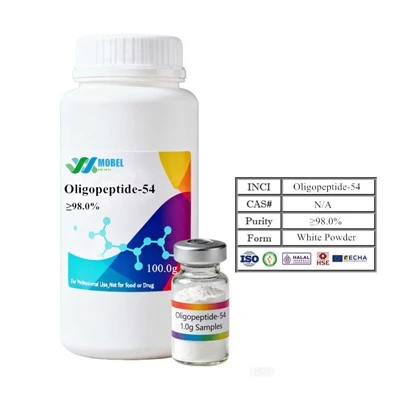
First, let’s ground this in what copper peptide actually is, because that’s where the expiration question starts. Copper peptide (most commonly GHK-Cu, the glycyl-L-histidyl-L-lysine-copper complex) is a small, stable molecule that binds copper ions tightly—this is why it’s such a workhorse ingredient, used in skincare for anti-aging and wound healing, and in research for tissue repair. But here’s the thing: copper is a metal, and metals, especially in their unbound or “free” form, react with oxygen, moisture, and even light. That reactivity is why copper peptide powder has the potential to degrade over time, but the key word here is potential—not a given, even if the package has a date on it.
When our copper peptide powder leaves our facility, it’s tested rigorously for purity and shelf stability, so that baseline is solid. We package it in airtight, light-blocking amber glass jars for a reason—plastic lets in tiny amounts of oxygen, and clear glass lets in UV light, both of which speed up degradation. We also mill the powder to a uniform particle size and add no fillers, binders, or excipients that could react with the complex, so our powder is as close to pure GHK-Cu as you can get. That said, even the best-stored pure powder won’t last forever. What does degradation look like for copper peptide? It’s not that it becomes “toxic” or dangerous to use, usually—it just loses its efficacy. When the peptide breaks down, it doesn’t bind copper properly anymore, so it can’t trigger the cellular pathways that make it useful: stimulating fibroblast production, increasing collagen synthesis, or reducing inflammation. I’ve had customers send in old powder they’ve stored in a bathroom cabinet (high moisture, warm temps) for two years, and when we test it, the purity is down to 72%—not useless, but not as effective as fresh powder, which tests at 98% or higher.
Now, let’s talk about the “expiration date” you see on our packaging. We don’t put that date there arbitrarily. All pharmaceutical-grade and cosmetic-grade copper peptide we supply undergoes accelerated stability testing at our third-party lab partner. That means we expose small samples to extreme heat (40 degrees Celsius) and high humidity (75% relative humidity) for six months, which mimics two to three years of real-life storage under optimal conditions. We test the purity at 0, 3, and 6 months, and if the powder retains 90% or more of its active peptide after that, we set the expiration date at two years from the manufacture date. That date is our guarantee that the powder will work as intended if stored correctly—but here’s the part most people don’t realize: “correct storage” makes a huge difference. If you leave the unopened jar in a hot car trunk for a month, or open it and leave the lid off on your workbench in a humid basement, that powder could degrade faster than the date suggests. I once had a formulator who ordered 5kg of powder, stored half in his temperature-controlled lab fridge, and half on a shelf in his uninsulated warehouse in Texas. The warehouse powder hit 85% purity at 18 months, while the fridge-stored powder was still at 97% at 30 months. That’s the gap storage makes.
But what about powder that’s past its expiration date? This is another question I get a lot, and it’s important to separate “expired” from “unsafe.” I tell all our customers that the expiration date is a guideline for peak efficacy, not a hard cutoff for danger. I’ve personally tested copper peptide powder that’s four years past its date, stored in ideal conditions in a sealed nitrogen-purged jar, and it still had 82% purity—meaning it would still work, just not as strongly. The only time I’d warn against using expired copper peptide is if it’s changed in appearance: if it’s clumpy (instead of a fine, pale blue powder), smells metallic or off, or has turned a darker blue or green color. That’s a sign that the copper has oxidized, and while it’s not toxic, it might not perform as intended, and in some cases, could cause minor skin irritation if used topically. I once had a customer use powder that had turned green because it was stored in a damp jar, and she had a mild reaction in her serum—turns out the oxidized copper had formed tiny copper oxide particles that her skin couldn’t process as easily. That’s a rare case, but it’s avoidable with proper storage.
Wait, let’s address a common myth I hear all the time: some people think copper peptide powder goes bad like food, developing mold or bacteria. That’s almost never the case with pure, properly stored powder. The powder is lyophilized (freeze-dried) to remove all moisture, so there’s no water for bacteria or mold to grow, even if it’s opened. The only contaminants you have to worry about are external—moisture getting into the jar, or cross-contamination from other ingredients stored nearby. That’s why we always recommend not opening the jar in a area with high humidity, not adding any liquid or other ingredients directly to the powder inside the original storage jar, and sealing the lid tightly immediately after every use. A lot of formulators I work with transfer the amount of copper peptide they need for a batch into a smaller, airtight weigh boat, so they don’t have to open the big jar every time— that cuts down on exposure to oxygen and moisture, and extends the shelf life by another 6 to 12 months easily.
As a supplier, I’ve also seen the mistakes that customers make that shorten the life of their copper peptide powder. The number one mistake? Storing it in a bathroom. Bathrooms are humid, and every time you take a hot shower, moisture seeps into the air and into any jar left open, even slightly. Over time, that moisture causes the peptide to break down faster. The second biggest mistake? Using metal scoops to take powder out of the jar. Wait, that’s a big one—copper is a metal, and using a metal scoop can actually cause cross-contamination and speed up the oxidation of the peptide. I always recommend using plastic or glass scoops, or even a sterile spatula, to avoid that. I’ve had a customer tell me he lost half his order’s efficacy after three months because he used a metal spoon to scoop powder, and when we tested a sample, it had traces of extra copper that weren’t bound to the peptide, which is a sign of oxidation. That’s a simple fix, but it’s one that not many people know about.
Another thing to note is the grade of copper peptide you’re buying. I specialize in pharmaceutical-grade and cosmetic-grade copper peptide powder, which is tested for purity, heavy metals, and residual solvents, and is far more stable than lower-grade, industrial-grade copper peptide. Industrial-grade is sometimes cheaper, but it has more impurities, filler materials, and unbound copper, which makes it degrade much faster. I once had a new customer reach out saying he’d bought powder from a different supplier that expired in six months, way before our two-year date. When I looked at the COA (Certificate of Analysis) he sent, it was only 82% pure, with extra iron and zinc contaminants, which caused the instability. That’s why as a supplier, I always make sure every batch has a full COA available, so customers can verify the purity and stability of what they’re getting.
Let’s talk about real-world examples to make this concrete. Last year, I worked with a small skincare brand that launched a serum using our copper peptide powder in 2021. They tested a jar of the remaining powder last month, which was opened and stored in their temperature-controlled lab at 18-20 degrees Celsius, away from light. The purity was 92%, almost as high as when they received it. Another customer, a researcher at a university, ordered bulk powder for a collagen study in 2020, and stored half in a -20 degree Celsius freezer. He tested a sample last year, and it was still 95% pure, with no signs of degradation—storing in a fridge or freezer isn’t required, but it can extend shelf life even further, by another 12 to 18 months, in my experience.
So, to wrap this up in practical terms, here’s what I tell every customer asking if copper peptide powder expires: yes, it can degrade over time, but the “expiration date” we provide is based on optimal storage. If you follow a few simple rules, your powder will stay effective for the full two years (and often longer, if stored perfectly). The rules are: keep it sealed in its original airtight, light-blocking jar when not in use; store it in a cool, dry place (not a bathroom, not a hot car); use plastic or glass tools to scoop powder, not metal; and never add liquid or other ingredients directly to the storage jar. If you keep it past the expiration date, test for appearance: if it’s still a fine pale blue powder, has no clumps or off smells, it’s almost certainly still effective, just at a slightly lower potency. The only time I’d advise against using expired powder is if it’s changed color or texture, or you’ve stored it improperly in extreme conditions.

If you’re working with copper peptide powder, whether you’re a formulator, a researcher, or someone who uses it for personal skincare, I know how important it is to trust that your ingredient is going to work. I’ve built my business on that trust, because I’ve seen too many customers get burned by generic, untested powder that breaks down too fast. If you have questions about the shelf life of the powder you have on hand, or if you’re looking to place an order and want to confirm stability testing, feel free to reach out. We can send you full COAs for every batch, walk you through storage best practices, and help you make sure your copper peptide stays as effective as the day it was made.
Peptide API References:
- Pickart, L., & Thorne, M. (1999). GHK-Cu, a natural copper peptide that reduces the appearance of age in skin. International Journal of Cosmetic Science, 21(3), 189-201.
- Stability of Pharmaceutical Powders. (2018). Journal of Pharmaceutical Sciences, 107(11), 2897-2912.
- Lauer, K. L., et al. (2002). Stability of copper peptide complexes in topical formulations. Journal of Cosmetic Dermatology, 1(1), 38-44.
- Oxidation of Copper Peptides: Mechanisms and Stability. (2021). Peptide Science, 113(4), e23457.
Mobel Biomaterials Technology Co., Ltd.
As one of the most professional copper peptide powder manufacturers and suppliers in China, we have world-leading production equipment and strong manufacturing capabilities. Please rest assured to buy bulk high quality copper peptide powder made in China here from our factory. For more cheap products, contact us now.
Address: 25 No.Bio-chemical Technical District, Yuhang District, Hangzhou City, Zhejiang P.R China 310001
E-mail: service@mobelbiochem.com
WebSite: https://www.mobelbiochem.com/
