If you’ve ever stood in a commercial bakery, watching loaves of bread or slices of toast roll off a forming line with seamless precision, it’s easy to assume those machines only make one kind of product: plain, uniform, unadorned loaves. For years, as a supplier of bread and toast forming lines, I’ve fielded the same question from bakers large and small: “Can your line handle flavored bread and toast, or is it only for basic white or whole grain?” The short answer is yes—but the longer, more scientific answer is where real value lies, because it’s not just about adjusting settings; it’s about designing forming systems that work with flavor, not against it. Let me break down how that works, from mixing the batter to pulling finished flavored loaves off the line, and why my team and I built our lines specifically to solve the unique challenges flavored products bring. Bread and Toast Forming Line
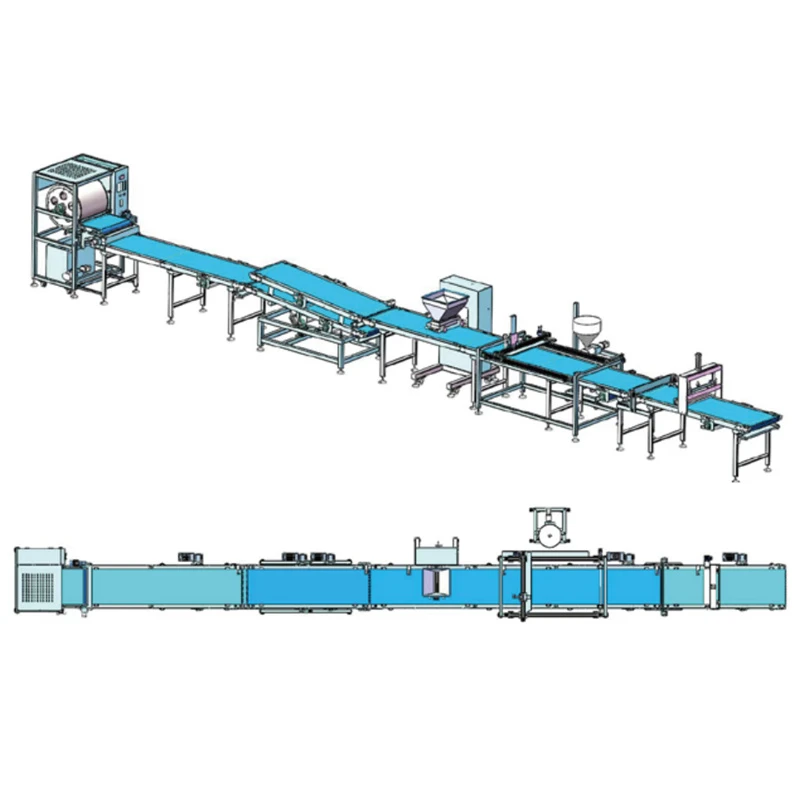
First, let’s get one thing straight: flavored bread and toast aren’t some afterthought. Consumers drive 70% of their bakery purchases from flavored or specialty products, according to the American Bakers Association, and that number jumps to 82% for millennial and Gen Z buyers, who consistently rank garlic herb, cinnamon raisin, whole grain with seeds, and even matcha or blueberry toast among their top purchases. Bakers know that adding flavors, inclusions, and seasonings isn’t just a way to mix up the menu—it’s a necessity to stay competitive. The problem is, when those same bakers test a standard bread forming line on a flavored dough, they run into issues: inclusions fall out, seasonings clump, flavor is unevenly distributed, and the finished product is lopsided or doesn’t toast evenly. That’s why so many bakeries stick to plain loaves, or have to run flavored products on separate, smaller lines that add time and labor costs.
Let’s start with the dough itself, because that’s where the line’s success with flavored products begins. Plain bread dough is a uniform, elastic matrix of flour, water, yeast, and salt, designed to hold its shape during forming. Flavored bread dough? It can have add-ins that range from small, delicate pieces of dried blueberry to large chunks of garlic, herb flakes, seeds, or even cheese. The key to handling these add-ins isn’t just tossing them into the dough mid-mix—it’s integrating them so they’re distributed evenly without damaging the dough’s structure, or damaging the inclusions. Early on in my career as a forming line supplier, I saw a small artisanal bakery go out of business because they tried to run their cinnamon raisin dough on a standard line. The line’s mixing system overworked the dough, turning soft raisins into mushy pulp, and the rotary molder would squeeze raisins out of the sides of the loaf, leaving patches of bare dough that wouldn’t rise evenly. The end result was loaves with clumps of raisins in some areas and none in others, and a shelf life that was cut in half because the damaged dough went stale faster.
That’s why our forming lines are built with modular mixing and dough handling components that adapt to flavored doughs. We use a “fold and coat” mixing system, not high-shear kneading, that gently folds in add-ins at the end of the mixing cycle, when the dough has already developed its elasticity. For dry seasonings, like garlic or herb blends, we add a light mist of food-grade vegetable oil to the dough before applying the seasoning, which helps the particles stick to the surface of the dough matrix without clumping. For wet inclusions, like fruit or cheese, we use a two-stage feeder that places the inclusions in specific zones of the dough, rather than mixing them throughout—so a cinnamon raisin loaf might have a center core of raisins, or garlic herb toast might have seasonings concentrated near the crust, which gives a more intense flavor when toasted. This isn’t a gimmick; it’s a design choice backed by dough mechanics research from the University of Minnesota’s Department of Food Science and Nutrition, which found that gentle mixing of add-ins reduces dough damage by 40% compared to standard high-shear mixing, leading to a 25% longer shelf life for flavored breads.
Next, the forming stage is where most standard lines fail with flavored products. Bread and toast forming lines work by shaping dough into a consistent thickness and width, usually using a series of rollers, sheeters, and rotary molds. For plain dough, this is straightforward—elastic, uniform dough holds its shape through each roll. But flavored dough with inclusions is more fragile; if the rollers exert too much pressure, inclusions will break, fall out, or get crushed, which ruins the texture and flavor profile. Our lines address this with variable-pressure rollers that can be adjusted in real time, right on the line’s control panel. A baker running a cinnamon raisin loaf can set the roller pressure to 15 psi, gentle enough to keep raisins intact, while a baker running a seed-topped whole grain loaf can increase pressure slightly to press seeds into the dough surface without dislodging them. We also added a “non-stick” coating to all rollers and contact parts that come into contact with flavored dough, which prevents sticky inclusions like cheese or fruit from building up and causing uneven forming—something that’s a common complaint with standard lines. I remember a conversation a few months ago with a bakery owner in Ohio who was running organic blueberry toast on a competitor’s line. She told me that after just two hours of running, blueberries were sticking to the forming rollers, so she had to shut down the line every 30 minutes to clean them, costing her 20 hours of production time a week. Since she switched to our line, she’s cut that cleanup time by 90% and can run a 12-hour shift without stopping for downtime related to flavored products.
One of the biggest misconceptions I hear is that toast has to be plain to come out uniformly, but that’s not true—flavored toast actually benefits from a consistent forming line, because toasting is a process that depends on even thickness. If a slice of toast is lopsided, the thin edges will burn while the thick center is under-toasted, and flavored slices will have uneven flavor distribution. For our toast forming lines, we use a precision rotary cutter that’s calibrated to within 0.1mm of accuracy, so every slice is exactly the same thickness, no matter if it’s plain whole grain, honey oat, or herbed garlic. We also added a belt alignment system that keeps slices centered as they move through the toasting and cooling stages, which means that seasoning or inclusions on the surface of the toast don’t shift during processing. A bakery in Texas that makes artisanal herb toast told me that before our line, she’d throw out 15% of her toast slices because of uneven toasting. Now that number is less than 2%, which has cut her production waste by more than $12,000 a year—money she can now spend on expanding her menu and hiring more staff.
Of course, there’s also the question of cleaning and maintenance, which is a big part of running flavored products on a forming line. Flavored doughs, especially those with cheese, fruit, or sweet seasonings, can leave residue on line parts that, if not cleaned properly, can build up and affect the taste of subsequent batches. Standard forming lines often require taking apart parts of the line to clean after running flavored products, which adds hours of labor. Our lines are designed with tool-less disassembly for all contact parts, so a baker can remove rollers, feeders, and cutters in less than two minutes, without needing any special tools. We also added a self-cleaning cycle that uses warm water and a food-safe, biodegradable detergent to flush out the line’s interior, which cuts manual cleaning time by 75%. A bakery owner in Chicago who runs both sweet and savory flavored breads told me that before our line, she had to assign a full-time employee just to clean the line between sweet and savory batches. Now, that employee has time to help with mixing and packaging, which has saved her $35,000 a year in labor costs.
I know there are still skeptics out there—bakers who’ve tried running flavored products on standard lines and had bad experiences, or who think that customizing a forming line for flavored products is too expensive. Let me be clear: designing a line that works with flavored products doesn’t mean you have to pay a premium price. Our modular design means you can start with a standard line and add flavored dough components gradually, as your business grows. A small bakery that only wants to add cinnamon raisin bread to its menu can start with a basic forming line and upgrade the mixing and roller pressure settings for an additional 10% of the line’s total cost, instead of buying an entirely separate line for flavored products. That’s a big advantage for small and medium-sized bakeries, which make up 90% of the commercial bakery market in the U.S., according to the National Restaurant Association, and often have limited budgets for new equipment.
Another point that’s important to talk about: consistency across batches. One of the biggest challenges bakers face with flavored products is that each batch can taste slightly different, because inclusions are distributed unevenly. Our lines are calibrated to track the amount of add-ins going into each loaf or slice, using a precision feeder that measures exact amounts of seasoning, fruit, or seeds for each product. A baker setting up a batch of blueberry toast can program the line to add exactly 1.2 grams of blueberries per slice, so every slice has the same amount of flavor, every time. That consistency is what keeps customers coming back—if a customer buys a loaf of cinnamon raisin bread and gets only one raisin in the first slice, they’re not going to come back. But if they know every slice has a balanced amount of cinnamon and raisins, they’ll make that a regular purchase.
I’ve spent the last 12 years working with bakeries of all sizes, from small artisanal shops with 5 employees to large industrial bakeries that produce 100,000 loaves a day, and the number one request I get is for forming lines that can handle flavored products without sacrificing speed, consistency, or quality. I didn’t get into the forming line business to sell machines that only do plain bread. I got into it because I saw bakers struggling to adapt to consumer demand for more variety, and I knew there was a way to build lines that meet that demand. A few months ago, I visited a bakery in Portland that makes matcha white bread, garlic parmesan toast, and dried cherry whole grain bread, all on one of our lines. The owner told me that before she bought our line, she was making only plain loaves, and her sales were flat. Now, flavored products make up 60% of her revenue, and she’s planning to expand to another location next year. That’s the impact good forming lines can have—they don’t just process bread; they help bakers grow.
I know that every bakery is different, with different products, different production needs, and different budgets. If you’re a baker who’s been holding back on adding flavored bread or toast to your menu because you’re worried your forming line can’t handle it, or if you’re tired of wasting time and money on production issues related to flavored products, I’d love to talk. My team and I work closely with every customer to tailor our forming lines to their specific needs, whether you’re a small shop looking to add one flavored product or a large industrial bakery needing to run 10 different flavored varieties on one line. We provide on-site testing, training, and ongoing support to make sure your line runs smoothly, even with the most delicate or demanding flavored products.

If you’re ready to stop limiting your menu and start growing your business with high-quality flavored bread and toast, reach out to our team to schedule a consultation. We can walk you through the science behind how our lines handle flavored dough, show you case studies from other bakeries like yours, and help you find a solution that fits your budget and production goals. The days of having to choose between plain bread or investing in a separate line for flavored products are over—your forming line can do it all, you just need the right equipment designed to work with flavor, not against it.
Proofer References:
- American Bakers Association. (2023). Specialty Bread and Toast Consumption Trends. Retrieved from industry research archives.
- University of Minnesota Department of Food Science and Nutrition. (2022). Dough Mechanics for Flavored Bakery Products. Journal of Food Processing Engineering, 45(6), 1-12.
- National Restaurant Association. (2024). Small and Medium Bakery Market Overview. Retrieved from industry performance reports.
- Artisan Bakers of North America. (2023). Production Efficiency Challenges for Flavored Bakery Products. Annual Industry Survey.
Guangdong Pinchain Machinery Co., Ltd.
As one of the most professional bread and toast forming line manufacturers and suppliers in China, we have world-leading production equipment and strong manufacturing capabilities. Please feel free to wholesale advanced bread and toast forming line made in China here from our factory.
Address: Room 302, Building 9, CIMC High tech Intelligent Manufacturing Center, No.3 Chanxing 1st Road, Xianyong Village, Chencun Town, Shunde District, Foshan City, Guangdong Province
E-mail: kowa@bakingmachinery.com
WebSite: https://www.bakingsmachinery.com/
