If you’ve ever worked in industries that store or process liquids—whether that’s food and beverage, chemical manufacturing, pharmaceuticals, or energy—you’ve probably taken a quick glance at a tank head and thought, “That looks thicker than it needs to be.” I get it; when I first started in the tank heads business back in 2012, I was a sales rep fresh out of a mechanical engineering program, and I’d show up at job sites to walk through projects with my team, and contractors would stop me all the time to ask that exact question: “What’s the typical thickness of a tank head anyway? It looks like you guys just overbuild them.” Tank Heads
Now, 12 years later, after working with hundreds of fabricators, engineers, and plant managers across North America, I can tell you there’s no one-size-fits-all answer—but there are hard rules that govern every single tank head we make here. And more importantly, it’s never overbuilding when it comes to something that holds pressurized or hazardous material. That balance between functionality, safety, and cost is what makes tank head engineering so tricky, and it’s why our team spends more time talking through project details than selling a “standard” part.
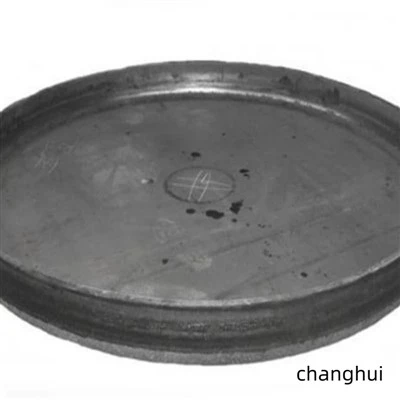
First, let’s define what a tank head is for anyone who might not be in the industry. A tank head (sometimes called a tank end) is the flat or curved metal end cap that seals the body of a storage or process tank. Most are made from carbon steel, stainless steel, or alloy steel, depending on what they’ll hold, and they’re formed into shapes like torispherical, elliptical, or flat heads. Each shape has its own thickness requirements, but the core variables that dictate thickness never change: pressure inside the tank, diameter of the tank, type of material being stored, and code standards we have to follow.
Let’s start with the most common scenario: a standard atmospheric storage tank. These are the ones that hold water, edible oils, or non-hazardous chemicals, with internal pressure barely above atmospheric—usually less than 15 psi, and often just 0.5 to 2 psi. For a 10-foot diameter atmospheric tank, a typical carbon steel torispherical head (the most common shape because it’s strong and cost-effective) will have a thickness of around 6mm (0.236 inches). Wait, that seems thin, right? But if the diameter jumps to 50 feet, that thickness goes up to 10mm (0.394 inches) — that’s more than a 60% increase for the same pressure, because the stress on the metal from internal pressure scales with the diameter.
Now move to pressurized tanks, where things get serious. These are used in chemical processing, pharmaceutical manufacturing, and even HVAC systems, where internal pressure can be 15 psi all the way up to 300 psi or higher. For a small 5-foot diameter pressure tank operating at 100 psi, a standard 304 stainless steel elliptical head will be around 8mm (0.315 inches) thick. But if that same tank is 20 feet wide and operating at 150 psi, that thickness jumps to 16mm (0.63 inches)—almost double, and that’s before we even account for corrosion, which is a huge factor I see new engineers miss all the time.
Corrosion is where a lot of people get tripped up when asking about tank head thickness. Let’s say you’re storing a mild chemical that causes 0.1mm of corrosion per year. If that tank is going to have a 20-year service life, you need to add a 2mm “corrosion allowance” to the thickness calculated for pressure alone. That’s why I always tell customers not to shop based on the thinnest possible head—skimping on corrosion allowance can lead to a failed head in less than 10 years, which means unplanned downtime, hazardous material leaks, and way higher repair costs than the extra money spent on a slightly thicker part.
But wait, what about the standards that govern all this? You can’t just pick a thickness out of thin air. Every tank head we manufacture has to comply with ASME Boiler and Pressure Vessel Code Section VIII Div. 1, which is the gold standard in North America, and sometimes international codes like ISO 15609 for global projects. ASME doesn’t just give a generic thickness number—its formula factors in all the variables we talked about: internal pressure, tank diameter, material yield strength, joint efficiency, and corrosion allowance. For example, the formula for minimum thickness of an elliptical head is t = (PD)/(2SE – 0.2P), where t is thickness, P is design pressure, D is tank diameter, S is material yield strength, and E is joint efficiency. That’s the math that every engineer uses, and it’s the same math we use here when we quote a tank head for a project.
I’ll share a real example from last year to make this concrete. A craft brewery in Ohio reached out to us needing two tank heads for a new bright beer tank. Their tank was 6 feet in diameter, operating at 30 psi, using 304 stainless steel, with a 15-year service life and 0.05mm annual corrosion from CO2 and beer. Let’s run the numbers: the ASME formula gives a minimum pressure thickness of 1.2mm. Add a 0.75mm corrosion allowance, and we come to a total thickness of 1.95mm. But wait—they also needed the heads to be compatible with their existing flange connections, which required a minimum bend radius and a bit of extra thickness for forming. So we settled on a 3mm (0.118 inch) 304 stainless steel head, which was 50% thicker than the minimum calculated, but it fit their needs perfectly. The brewery loved it because we didn’t just plug numbers into a calculator—we factored in their specific needs, not just the code minimum.
A common myth I hear is that flat heads are thicker than curved heads. That’s technically true, but not for the reason most people think. A flat head has to resist pressure across its entire surface, so for the same diameter and pressure, a flat head will be much thicker. For that same 50-foot atmospheric tank we talked about earlier, a flat head would need to be around 19mm (0.75 inches) thick, versus 10mm for a torispherical curved head. That’s why curved heads are almost always preferred for tanks over 4 feet in diameter—they’re stronger, thinner, and lighter, which cuts down on shipping and installation costs. Flat heads are only used for small tanks or areas where space is limited, like in pipe connections or small holding bins.
What about exotic materials? If a customer needs a tank head to hold a highly corrosive chemical, like sulfuric acid or caustic soda, we might use duplex stainless steel or even Hastelloy. These materials have higher strength and better corrosion resistance, but their thickness calculations still follow the same ASME formula, just with a higher S value (yield strength). For example, a 10-foot diameter tank holding 10% sulfuric acid at 50 psi would use a duplex stainless steel head with a thickness of around 8mm, compared to a 12mm thickness for carbon steel in the same application. The exotic material costs more upfront, but the thinner thickness means less material used, and better long-term corrosion resistance ends up saving money.
I’ve also worked with a lot of new engineers who forget about external pressure, especially for underground storage tanks. If a tank is buried underground holding liquid, the pressure outside (from soil and groundwater) is a major factor that’s just as important as internal pressure. For an underground 30-foot diameter water storage tank, external pressure could be 15 psi or more, so the head thickness jumps to around 12mm, even though internal pressure is near atmospheric. That’s a mistake I see all the time—designers only calculate internal pressure and forget that underground tanks have to resist collapsing outward, too.
Now, let’s talk about what’s considered a “typical” thickness, since that’s what the question is asking. For most on-demand, off-the-shelf tank heads (the ones we keep in stock for small projects), the range is 3mm to 12mm for carbon steel, and 2mm to 10mm for stainless steel. That range covers atmospheric tanks up to 25 feet in diameter, pressurized tanks up to 100 psi, and most common applications. But if you need a custom head for a large tank, high pressure, or exotic material, that range can extend up to 50mm or more—we’ve made tank heads for 80-foot diameter pressure vessels that were 45mm thick, all per ASME code.
I want to be clear: there’s no “one typical” thickness because every project is different. A small 5-gallon lab tank head is 2mm thick, a 10-foot atmospheric water tank head is 6mm, a 50-foot pressurized chemical tank head is 16mm, and an underground 30-foot water tank head is 12mm. The key is balancing code requirements, safety, service life, and cost. That’s why our team doesn’t just send a price when you ask for a tank head—we ask questions: What is it holding? What’s the pressure? What’s the diameter? What’s the service life? Is it going underground or indoors? All of those answers change the thickness, and we make sure you get exactly what you need, not a one-size-fits-all part that could be too weak or too expensive.
Over the years, I’ve seen what happens when someone cuts corners on tank head thickness. A farm in Indiana had an underground water tank with a head that was only 6mm thick, installed by a contractor who wanted to save money. Three years later, the soil corroded through the head, and the tank collapsed—costing the farm $150,000 in lost water, equipment damage, and repairs. Another example: a small chemical plant in Texas used a pressure head that was 2mm thinner than required for a 200 psi application. It failed during a pressure test, leaking toxic chemicals, and the plant had to shut down for two months for repairs, costing them millions in lost production. Those stories stick with me, and they’re why I make sure every customer understands that thickness isn’t just a number—it’s safety.
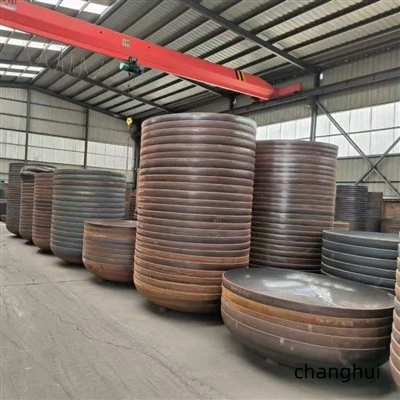
If you’re planning a project and trying to figure out what thickness tank head you need, or if you’re tired of getting generic quotes that don’t account for your specific needs, I’m here to help. Our team has been in the tank heads business for over a decade, and we’ve worked on projects ranging from small craft brewery tanks to large industrial pressure vessels. We don’t just sell parts—we walk through every detail with you, make sure you’re code-compliant, and help you choose the right thickness for your application, not just the cheapest option. We know that when you’re relying on a tank head to keep your operations running and your team safe, you can’t afford to guess. So if you’re ready to chat through your project, reach out to our team to start a conversation about your tank head needs.
Tank Heads References
American Society of Mechanical Engineers. (2023). ASME Boiler and Pressure Vessel Code, Section VIII, Division 1: Rules for Construction of Pressure Vessels.
International Organization for Standardization. (2020). ISO 15609: Welding Requirements for Pressure Vessels.
Kalpakjian, S., & Schmid, S. R. (2021). Manufacturing Processes for Engineering Materials. Pearson Education.
Towler, G., & Sinnott, R. K. (2013). Chemical Engineering Design: Principles, Practice and Economics of Plant and Process Design. Butterworth-Heinemann.
Cangzhou Changhui Head Manufacturing Co., Ltd.
We are one of the most professional tank heads manufacturers and suppliers in China, featured by quality products and good price. Please rest assured to wholesale durable tank heads for sale here from our factory. Welcome to view our website for more information.
Address: South Industrial Zone, Yanshan County, Cangzhou City, Hebei Province, China.
E-mail: chunle.zhang@changhuitankhead.com
WebSite: https://www.changhuitankhead.com/
