If you’re someone living with varicose ulcers, or a caregiver helping to manage them, chances are you’ve stared at the wound on your lower leg and wondered: “Can I just slap on a regular adhesive dressing to cover this?” As a supplier of adhesive dressings, I get this question all the time—from patients frustrated with bandages that won’t stay put, from nurses looking for practical solutions, and even from fellow medical supply folks who want to make sure they’re recommending something safe, not harmful. Let me start by pulling back the curtain on what I actually know, not just as a seller, but as someone who’s spent years talking to clinicians and patients about wound care—no fancy jargon, no vague claims, just the real science behind adhesive dressings and varicose ulcers. Adhesive Dressings
First, let’s get one thing straight: varicose ulcers aren’t the same as the scraped knee you get on a hike or a small cut from chopping vegetables. They’re chronic wounds, usually triggered by venous insufficiency—when the valves in your leg veins don’t work right, so blood pools instead of flowing back up to your heart. That pooling causes pressure to build up in the leg, leading to swelling, skin discoloration, and eventually an open sore that often takes weeks, even months, to heal. Most of these ulcers are on the lower third of the leg, around the ankle, and they’re surrounded by fragile, stretched skin that’s prone to tearing. That’s a key detail you need to remember when thinking about adhesive dressings: the skin around a varicose ulcer is extra delicate, so the wrong dressing can do more harm than good.
Now, can you use an adhesive dressing on it? The short answer is: not all adhesive dressings, and not without checking a few critical boxes. Let’s break down why this matters, because I’ve seen too many people grab a generic adhesive bandage from the drugstore, slap it on, and end up with a skin tear that makes the ulcer worse. A few years back, a customer reached out to me panicking—his 72-year-old mom had a small varicose ulcer on her ankle, and he’d put a regular plastic adhesive bandage on it because it was cheap and easy. The bandage pulled when he took it off, tearing the thin skin around the wound, and she ended up with an infection that kept her in physical therapy for three weeks. That’s the kind of story that sticks with me, because it’s avoidable.
So, what makes an adhesive dressing safe (or not) for varicose ulcers? Let’s start with the basics of wound dressing science. For any wound, the goal is to keep it moist (that’s a big one—old-school dry bandages slow healing), protect it from bacteria, absorb excess drainage (varicose ulcers often leak a lot of fluid, called exudate), and not damage the surrounding skin. Adhesive dressings work by sticking to the skin to hold the dressing in place, but the adhesive type is everything here.
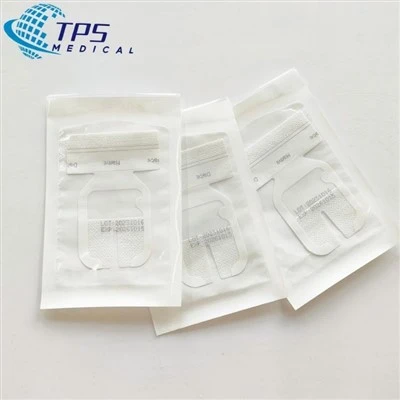
Generic adhesive bandages, the kind you buy for minor cuts, usually have a strong, acrylic-based adhesive that’s designed to stick tight to normal, intact skin. On the fragile, atrophic (thin) skin around a varicose ulcer, that adhesive sticks too well. When you remove the dressing, it pulls off top skin layers, causing tears, which not only hurt but create new entry points for bacteria. That’s why, as a supplier, I emphasize that not all adhesive dressings are created equal—we make our line with a gentle, silicone-based adhesive, not acrylic. Silicone adhesive adheres enough to stay in place during daily movement (walking, getting dressed, showering) but releases easily when it’s time to change the dressing, even on delicate skin. That’s a game-changer for varicose ulcer patients, who need dressings that don’t irritate their already fragile limbs.
But even with the right adhesive type, there are other factors to consider. Varicose ulcers have different stages, right? Some are mild, with low drainage and small wound size; others are larger, with heavy exudate, and may even have signs of infection (like redness, increased pain, or foul-smelling fluid). For mild, low-drainage varicose ulcers, a thin adhesive dressing with silicone adhesive can work well, as long as it’s not covering too big an area. But for wounds with heavy drainage, a thin adhesive dressing won’t absorb enough fluid—you need a more absorbent dressing, maybe an adhesive foam dressing, which has a thick, porous core that soaks up exudate. Again, that’s where our product line comes in: we have adhesive foam dressings specifically formulated for chronic wounds like varicose ulcers, with a non-stick inner layer that won’t adhere to the wound bed itself, only the surrounding healthy skin. That prevents another common problem: the dressing sticking to the actual ulcer, so when you change it, you don’t damage new tissue that’s growing.
Wait, let’s talk about that for a second. A lot of people think “adhesive” means it sticks to everything, but a well-designed adhesive dressing will have a non-adherent contact layer that sits directly on the wound. That’s a key feature I look for, and one I’d recommend to anyone managing a varicose ulcer. If you see an adhesive dressing that says “contact layer is adhesive,” run the other way— that’s almost certain to stick to the wound bed, causing pain and tissue damage when removed.
Another big consideration: compression. Varicose ulcers don’t heal well without compression therapy, right? Because the root cause is venous hypertension, you need to apply gentle pressure to the leg to help blood flow back up. So when you’re using an adhesive dressing, you have to make sure it doesn’t interfere with compression, or get wrinkled under compression wraps. Our adhesive dressings are cut to fit snugly without bunching, and the edges are designed to lie flat, so they work with compression stockings or bandages without shifting. That’s something generic bandages can’t do—they’re too small and often bunch up, making compression less effective.
Now, let’s get to the mistakes I see people making, which are super common. First, using a dressing that’s too small. If your varicose ulcer is 2 cm wide, don’t use a 3 cm adhesive dressing—you need the dressing to cover the entire wound and about 1-2 cm of healthy skin around it to keep bacteria out. A generic bandage might only cover the wound, leaving the edges exposed. Second, not changing the dressing often enough. Varicose ulcers produce a lot of exudate, and if the dressing gets saturated, it can break down, leak, and let bacteria in. Our line includes dressings with high moisture vapor transmission rates, so they stay breathable, but you still need to check them daily and change them when they’re wet or soiled. Third, not talking to your healthcare provider first. I know it’s tempting to self-manage, but varicose ulcers can get infected quickly, and they need professional evaluation to make sure there’s no underlying issue like deep vein thrombosis. That said, once a provider has cleared the wound for home care, an appropriate adhesive dressing can be a great addition to your routine.
Let me share a recent success story to make this real. A customer named Maria reached out to us last month. She’s a 58-year-old teacher with a varicose ulcer on her left ankle, diagnosed about six months ago. She was using a generic adhesive bandage that kept falling off during class, and she was struggling with the pain of changing it—she told me she’d often cry when taking the old bandage off. Her doctor had mentioned trying silicone adhesive dressings, but she couldn’t find ones that were big enough for her wound. We sent her a sample of our medium adhesive foam dressing, and she texted me a week later saying it was a game-changer. “It stays on all day, even when I’m on my feet for 8 hours,” she said, “and when I take it off, there’s no pain, no skin tears. The ulcer looks like it’s healing faster too.” That’s the kind of outcome we love to hear, because it’s exactly why we design our dressings for chronic wounds.
But let’s be honest—adhesive dressings aren’t right for every varicose ulcer. If your ulcer is infected, or if the wound bed is very raw and bleeding, your doctor might recommend a different type of dressing, like a hydrocolloid or alginate, before moving to an adhesive option. Also, some people with venous insufficiency have allergies to adhesive materials—silicone is less likely to cause an allergic reaction than acrylic, but it’s still possible, so always test a small area of skin first if you’re trying a new dressing.
Another point I want to make: as a supplier, we’re not just selling products—we’re selling knowledge. A lot of customers don’t know the difference between a generic adhesive bandage and a dressing designed for chronic wounds, so we spend time walking them through the features, how to choose the right size, how to apply it correctly, and when to check in with their doctor. For example, applying an adhesive dressing isn’t just peeling and sticking it on—you need to make sure the skin is clean and dry before applying, that you don’t stretch the dressing too tight (which can cause blisters), and that you press the edges down firmly to ensure adhesion without causing discomfort. We even send out free guides with every bulk order, because we want people to use our products safely and effectively.
Now, let’s address the elephant in the room: why would you use an adhesive dressing instead of other types? For many people, the convenience is huge. Adhesive dressings stay in place better than non-adhesive ones, especially on areas that move a lot, like the ankle. They don’t need to be held on with tape, which is another thing that can irritate delicate skin. They’re also discrete—many of our dressings are thin and semi-transparent, so you can wear socks, pants, even sandals without anyone noticing you have a dressing on. That’s a big deal for people who are self-conscious about their varicose ulcers or the treatments they need.
But here’s what I want every reader to take away from this: adhesive dressings can be used on varicose ulcers, but only the right kind. Steer clear of generic acrylic-adhesive bandages—they’re too harsh for fragile leg skin. Look for dressings with gentle silicone adhesive, a non-adherent contact layer, and enough absorbency to handle your wound’s drainage. Always check with your healthcare provider before starting any new wound care routine, because varicose ulcers are chronic and require personalized care.
If you’re a clinician looking for consistent, high-quality dressings to recommend to your patients, or a patient or caregiver looking for a better option than what’s at the drugstore, I’d encourage you to reach out to discuss your needs. We work with individual patients, home health agencies, and clinical facilities, and we’re happy to help you find the right dressing for your specific wound size, drainage level, and skin type. No pushy sales pitch, no confusing fine print—just straight talk about wound care products that actually work for varicose ulcers.
Adhesive Dressings At the end of the day, my team and I got into this business because we saw how many people were struggling with varicose ulcers—dealing with pain, frequent dressing changes that made things worse, and slow healing. We wanted to make a product that solves those problems, and after years of testing and refining, we know our adhesive dressings do just that. It’s not about selling something that just sticks—it’s about helping people heal, with a dressing that’s safe, gentle, and effective for their unique wound needs.
References
- National Institute for Health and Care Excellence (NICE). Venous Leg Ulcers: Assessment and Management. Clinical Guideline CG195. 2020.
- Woo K, Sibbald G, et al. International Consensus: Wound Bed Preparation 2020. Journal of Wound, Ostomy, and Continence Nursing. 2020;47(3):212-225.
- Gray M, et al. Adhesive-Related Skin Injury: A Systematic Review and Meta-Analysis. Journal of the American Geriatrics Society. 2018;66(10):1907-1915.
- Partsch H, Mosti G, et al. Compression Therapy for Venous Leg Ulcers: A Review of Clinical Evidence. Phlebology. 2019;34(1):12-21.
- Schultz G, et al. Principles of Wound Healing. Advances in Skin & Wound Care. 2019;32(1):22-32.
Hangzhou Tuopusi Medical Products Co., Ltd.
As one of the most professional adhesive dressings manufacturers and suppliers in China, we offer a wide range of products with superior quality. Please feel free to wholesale bulk customized adhesive dressings at competitive price from our factory. Also, free sample is available.
Address:
E-mail: sales@tpsmedic.com
WebSite: https://www.medressing.com/
