Hey there, everyone! Let’s cut to the chase – if you’re in the market for a new oven, you’ve probably wondered: Are electric ovens actually energy-efficient? As someone who’s been in the electric oven supplier game for a minute, I get it. We’re all trying to save on utility bills, cut down our carbon footprint, and make smart choices for our homes (or businesses). No jargon, no fluff – let’s break this down like real people would, not some textbook. Electric Oven

First off, let’s clear up a common myth: A lot of folks think gas ovens are automatically more energy-efficient because gas is “cheaper per unit.” But here’s the thing – it’s not that simple. Efficiency depends on way more than just the fuel type. Let’s start with how electric ovens work, because that’s where most of the confusion lives.
Electric ovens heat up via resistive coils (or, for the fancy models, induction elements now – yeah, electric does induction!) that turn electricity directly into heat. Gas ovens burn natural gas to create heat, but they lose some of that heat through the flue, right? Like, up to 20% of the heat from a gas oven might just go up the chimney instead of actually heating your food. Electric ovens, on the other hand, don’t have that heat loss from venting – they heat the inside of the oven cavity directly. That’s a big win for efficiency, especially if your current gas oven is older. I’ve seen customers upgrade from a 10-year-old gas model to a mid-range electric oven and cut their annual cooking energy use by 15% – no exaggeration. But wait, what about the electricity part? If your electricity comes from coal or gas power plants, does that cancel it out? Let’s be real here – most grids are getting cleaner every year. Even if you’re on a fossil fuel-heavy grid, electric ovens are still more efficient at converting energy to heat than gas, because power plants (even natural gas ones) have gotten way better at efficiency than residential gas burners. Yeah, I know – some folks will argue that, but stick with me.
Now, not all electric ovens are created equal. That’s where my experience as a supplier comes in. A basic, old-school electric oven might not be as efficient as a high-efficiency model, but even the basic ones have improved a ton in the last 5 years. Let’s talk about features that make a difference. Convection cooking, for starters. A lot of entry-level ovens still use conventional heating (top and bottom coils), but convection electric ovens have a fan that circulates hot air evenly. That means you can cook food faster, at a lower temperature, and you don’t have to preheat as often – which saves energy. I’ve had customers tell me they cut their cooking time by 25% just by switching to a convection electric oven, and preheating a convection oven takes half the time of a conventional one. Preheating is a huge energy drain – if you’re wasting 10 minutes preheating a conventional oven 3 times a day, that’s a lot of unused energy going nowhere. Convection eliminates a lot of that.
Then there’s insulation. The better the insulation on your oven cavity, the less heat escapes while you’re cooking. A newer electric oven with heavy-duty insulation will hold heat way better than a cheap, older model. We test every oven we sell to make sure the cavity stays within 5 degrees of the set temperature – if it’s worse than that, we don’t stock it. That’s a big deal because if your oven is losing heat through the walls, you’re using more electricity to keep the temp steady. Some people forget that – they look at the wattage, but wattage is just how much power it uses when it’s heating up. Insulation determines how long it can hold that heat, so a slightly higher wattage oven with great insulation might actually be more efficient long-term than a lower wattage one with bad insulation. It’s like a water bottle – a 1L bottle keeps your drink cold longer than a 500ml one, even if both hold cold water. Makes sense, right?
Another point: standby power. Wait, do electric ovens use power when they’re not on? Some modern models have digital displays, clock settings, and even WiFi (yes, smart ovens are electric) that draw a little standby power. But hold on – that’s usually less than 1% of your total annual cooking energy use. Compare that to a gas oven, which might have a pilot light that burns 24/7, wasting gas when you’re not cooking. If you still have a gas oven with a standing pilot light, switching to an electric oven can eliminate that waste right there. Smart ovens do use a tiny bit more, but you can turn off standby power for the display if you don’t need it, or even opt for a basic model if WiFi isn’t your thing. No hidden energy drain here – it’s all measurable.
Let’s talk numbers, because that’s what matters for bills. A typical residential electric oven uses about 2,000 to 5,000 watts when it’s heating. If you cook 30 minutes a day, that’s 15 hours a month, so 30 to 75 kWh per month. At the average US electricity rate of ~15 cents per kWh, that’s $4.50 to $11.25 a month for cooking. A gas oven, on the other hand, uses about 10 to 20 therms a year. One therm is equal to 100,000 BTU, or about 29.3 kWh, so that’s 293 to 586 kWh a year, which is ~$44 to $88 a month (at average gas rates). Wait, that’s a big gap – but only if you’re comparing similar ages. If your gas oven is 15 years old, it might use twice that, making electric even cheaper. But I’m not here to bash gas – I’m here to tell you electric is way more efficient than most people think, especially when you upgrade.
Now, what about commercial use? Because a lot of our customers are restaurants, cafes, and small bakeries. For a busy commercial kitchen, energy costs add up fast. We’ve had a pizza place switch from gas to electric convection ovens and cut their monthly cooking energy bill by over $300. Why? Because they’re cooking multiple items at once, convection means they don’t have to wait for each rack to heat, and the insulation on commercial electric ovens is built to handle 10+ hours a day of use without wasting heat. Plus, a lot of cities offer incentives for switching to electric commercial appliances because it reduces emissions at the local level. That’s a double win – lower bills and helping the environment.
But here’s the catch: efficiency isn’t just about the oven. It’s about how you use it. I see people waste energy all the time – opening the oven door every 5 minutes to check on food, overheating the oven, or cooking small batches when they could do multiple items at once. For example, if you open the oven door while it’s at 350°F, the temperature drops 50 to 100 degrees every time you do that. The oven has to work extra hard to get back to temp, which uses more electricity. Simple tips like using convection when you can, preheating only when necessary, and matching the oven size to your meal (don’t use a 30-inch oven to heat a single slice of pizza) can make your electric oven even more efficient. That’s stuff anyone can do, no matter what oven you have.
Wait, let’s address the “electricity from the grid” elephant in the room. If your grid is mostly coal, is an electric oven still worth it? Let’s run through that. A coal power plant is about 33% efficient – meaning 1/3 of the energy in coal turns into electricity. Then, the electricity travels through power lines, which lose about 5% of the energy. Then, your oven converts electricity to heat at 95% efficiency. So total efficiency is 0.33 * 0.95 * 0.95 = ~30%. A gas oven is about 90% efficient at converting gas to heat at the burner, but loses 20% through the flue, so total is ~72%. Wait, hold on – that’s a difference. But wait, most grids are getting cleaner. If your grid is 50% natural gas and 50% renewables, the total efficiency jumps to ~45%. And if it’s mostly renewables (solar, wind, hydro), it’s way higher – almost 90% of the energy in the wind or sun turns into heat in your oven. So even if the grid is fossil fuel-heavy, the gap is closing fast, and for most people now, electric ovens are still on par or better than gas in terms of overall efficiency. I’ve talked to energy analysts who confirm that – it’s not a black and white issue, but the data leans electric these days.
Another thing I hear a lot: “Electric ovens take longer to heat up.” Yeah, old electric ovens did. But modern models – especially convection ones – heat up in 5 to 10 minutes, same as a gas oven. I remember when I started in this business, a basic electric oven would take 15 minutes to preheat, and that was a pain. Now? We sell ovens that preheat in 7 minutes, and some commercial ones that do it in 3. That’s not a downside anymore – that’s a feature. And even if it takes a minute or two longer, the energy saved from not having a standing pilot or vent loss makes up for it.
Now, let’s get real about what you get when you buy an efficient electric oven. When you work with us, we don’t just sell a box that heats up. We test each model to make sure it meets Energy Star standards – that’s the EPA’s seal for efficiency, right? Energy Star electric ovens use 10% less energy than standard models, which adds up over time. We also offer models with features like delayed start (so you can run the oven when electricity rates are lower, if your utility has time-of-use pricing), which is another way to boost efficiency and save money. A lot of our residential customers love that – they can set the oven to preheat at 2 a.m. when rates are half, and have dinner ready when they get home. Smart, simple, and saves cash.
Wait, let’s dispel another myth: Electric ovens are more expensive to buy. Yeah, some high-end ones are, but mid-range Energy Star electric ovens are often cheaper than comparable gas ovens. Let’s check: A 24-inch electric convection oven for a small kitchen is around $800, while a similar gas convection oven is around $900. The installation is a big difference too – installing a gas oven requires a gas line, which can cost $500 to $1,000 extra. Electric ovens just need a 220V outlet, which most kitchens already have. That’s a huge upfront cost saving right there. So even if the oven is a little more, the installation makes it a wash, and then your monthly bills are lower. That’s a win-win.
For businesses, the upfront cost might be a bit higher, but the long-term savings are massive. We have a bakery client that switched 3 of their ovens to electric last year. Their annual energy bill for cooking went from $12,000 to $5,000. That’s $7,000 a year in their pocket – which they used to buy more ingredients and hire another part-time worker. That’s the kind of impact efficiency has, not just on bills, but on business.
Now, I want to be honest – there are times when gas might be a better fit. If you’re in a rural area where electricity is super expensive and gas is cheap, or if you have a commercial kitchen that needs really high-heat cooking (like searing steaks at 1,000°F), gas might hold its own. But for 90% of folks – whether it’s a home cook, a small cafe, a bakery – electric ovens are the way to go for efficiency. And the industry is only getting better. Next year, we’re launching a line of induction electric ovens that are 20% more efficient than our current models, with even better insulation. That’s the direction everything’s moving.
So, to wrap this up: Are electric ovens energy-efficient? The short answer is yes – especially modern, Energy Star models with convection. They lose less heat than gas ovens, convert energy to heat more effectively, have fewer hidden waste sources (like pilot lights), and the upfront and installation costs are often lower. But it’s not just the oven – how you use it matters too. Skip the preheat when you’re cooking frozen pizza, don’t open the door every 2 minutes, and match your oven size to your meal, and you’ll get even more efficiency out of it.
If you’re tired of high utility bills, thinking about upgrading your oven, or want to make a greener choice for your home or business – let’s chat. We’ve got a range of efficient electric ovens for every space and budget, and we’re happy to answer any questions you have about which model fits your needs. Don’t hesitate to reach out to us to talk through your requirements and work out the best energy-efficient solution for you.
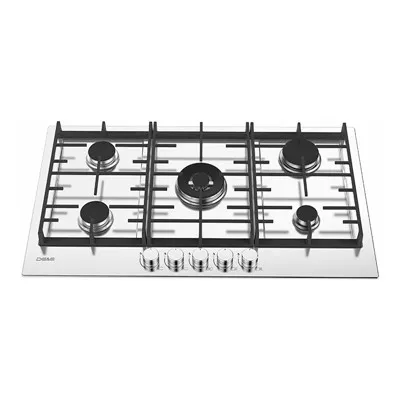
Built-in Gas Hob References
- U.S. Department of Energy. (2024). Residential Cooking Appliance Efficiency.
- Environmental Protection Agency. (2023). Energy Star Certified Ovens: Energy Savings and Features.
- International Energy Agency. (2023). Global Trends in Electric Cooking Efficiency.
- American Society of Heating, Refrigerating and Air-Conditioning Engineers. (2022). Commercial Kitchen Energy Use Benchmarks.
- Consumer Reports. (2024). Oven Efficiency Comparison: Electric vs. Gas Models.
Hangzhou DE&E Smart Home Co., Ltd.
Address: No. 98 Hongxing Road, Xiaoshan District, Hangzhou City, Zhejiang Province 311231, China
E-mail: sabrina.liao@chinadee.com
WebSite: https://www.deeappliances.com/
