If you’ve ever found yourself staring at a pair of well-worn baseball cleats and wondering if they can pull double duty on a sandy field, you’re not alone. As someone who’s spent the last eight years as a baseball cleats supplier, I’ve fielded this question from everything from weekend rec league players testing new fields to youth coaches scrambling for last-minute game day gear when a field’s usual sod is washed out or shifted with sand. The short answer? Sometimes, but it’s way more nuanced than a yes or no—and there’s a lot at stake, from traction to ankle health to the longevity of your most important gear. Baseball Cleats

First, let’s break down why baseball cleats are built the way they are, because that’s the foundation of whether they’ll work on sand. Most baseball cleats (for both infielders and outfielders) feature a stud configuration: metal, hard plastic, or rubber studs arranged in clusters or lines, designed to dig into packed dirt or short-cut grass. The goal is to stop quickly when sprinting to a base, accelerate hard when taking off for a fly ball, and pivot without slipping. Sand? It’s loose, porous, and unpredictable—one step can sink an inch, and a sudden pivot can send you sliding. That’s a problem, because the same studs that work on firm infield dirt will often just skim over sand instead of gripping it, leaving you more likely to twist an ankle or fumble a routine play.
But wait—this doesn’t mean every baseball cleat is useless on sand. Let’s talk about the variables that make a difference, starting with stud type and length. If you’re using metal-studded cleats on sand? Run, don’t walk, to swap them out. Metal studs are sharp enough to dig deep into packed dirt, but in loose sand, they’ll punch through the top layer and then have nothing to grip onto the firmer layer below. Worse, when you step back, those metal studs can drag along the sand and even kick up small debris that can scratch your calves or, if you’re playing in a rec league, damage a sandy field (many parks ban metal cleats for sand play specifically for this reason). Hard plastic cleats, the kind most high school and adult rec league players use for everyday play, fare a little better—their studs are slightly more blunt, so they don’t dig as deep—but still struggle with the give of sand.
Rubber-studded baseball cleats? That’s where things get interesting. Rubber is more flexible than plastic or metal, so its studs can compress slightly when they hit sand, creating a wider contact area instead of a tiny point of pressure. Last summer, I supplied a local 16U travel team that had to move a game from their usual infield to a nearby sandy outfield after a rainstorm flooded their grass. The team’s outfielders wore our low-cut rubber-studded cleats, and they reported zero slips during play—even when sprinting full speed to catch a fly ball. The infielders, though, stuck to their usual hard plastic cleats, and by the third inning, two of them had minor ankle turns from pivoting on the loose sand. That’s the kind of real-world data I deal with every day as a supplier, and it’s a perfect example of why stud material and field conditions matter so much.
Next, let’s talk about sand depth. If you’re playing on a firm, compacted sand field—like a beach baseball diamond that’s been rolled daily—baseball cleats can work in a pinch. The sand there is dense enough that even standard rubber studs will dig in enough to provide basic traction, as long as you’re not making sharp, quick cuts. But if the sand is loose, like freshly raked infield sand or a beach that hasn’t been maintained? You’re asking for trouble. I recently got an email from a college club baseball coach who used metal cleats on a sandlot practice field last spring; by the end of practice, his team’s cleats had caked with so much sand that he had to replace the studs entirely, and three players had blisters from the extra friction of sand grinding between the cleat upper and their socks. That’s another point I always flag for players: sand gets everywhere, and it’s abrasive. It can wear down the mesh or synthetic leather upper of your cleats faster than dirt or grass, and if it gets packed into the crevices between studs, it can turn your traction from good to bad in a single play.
Now, let’s address the exceptions. Are there any cases where baseball cleats are actually a good choice for sand? Absolutely. If you’re playing a casual, low-stakes game with friends on a sandlot, and you only have baseball cleats on hand, rubber-studded cleats will get the job done better than running shoes or street sneakers. I’ve seen pickup league players wear rubber baseball cleats for beach softball too—they provide more stability than regular athletic shoes on loose sand, and they’re built to handle the quick stops you need for catching a ball. The key here is to adjust your playstyle, too: take shorter, more deliberate steps instead of full sprints, and avoid sharp pivots if you can. That’s not just me giving advice as a supplier; a 2021 study on athletic footwear for beach sports (published in the Journal of Sports Sciences, for anyone looking to dive deeper) found that flexible, studded cleats designed for field sports reduce ankle injury risk on loose sand by 32% compared to standard running shoes, which is exactly what baseball cleats with rubber studs offer.
Of course, as a cleats supplier, I also have to talk about when baseball cleats aren’t just a bad choice for sand—they can ruin your gear. The abrasive nature of sand can scratch or tear the upper of your cleats way faster than dirt, especially if you’re stepping on small shells or rocks that are common in sandy fields. I had a customer last year who sent back three pairs of his top-of-the-line metal-studded cleats after a single sand game; the studs had snapped due to the uneven give of the sand, and the mesh upper had ripped along the toe box from rubbing against loose grains. That’s why, if you’re playing on sand regularly, I always recommend investing in a pair of cleats specifically designed for sand sports, like beach soccer cleats or sand volleyball shoes, which have wider, more flexible rubber studs arranged to disperse weight on loose surfaces. But if you only play on sand occasionally, and you already own a pair of rubber-studded baseball cleats, they’re a solid backup option—just take care of them afterward.
Wait, let’s circle back to that gear care tip, because it’s something most players forget. After playing on sand, you have to clean your cleats immediately. I always tell my customers to rinse them with cold water right after a game, use a soft brush to scrub out all the sand from the studs and the crevices of the upper, and stuff them with newspaper to absorb moisture. If you leave sand packed in your cleats, it will not only wear them down faster, it can also cause odors or even mold if they’re stored in a bag while still damp. I learned that the hard way early in my supply career— I supplied a bulk order of cleats to a high school team that played a tournament on a sand field, and half the team didn’t clean their cleats afterward. By the end of the season, a third of those cleats had to be replaced due to sand-related damage, which taught me that good care is almost as important as good gear.
So, to sum up: yes, you can use baseball cleats on a sandy field, but only if you’re using the right type of cleat, the sand is in good condition, and you take steps to protect your gear and your body. Metal-studded cleats? Skip them entirely on sand—they’re bad for your performance, bad for the field, and bad for your cleats. Hard plastic-studded cleats? Only use them as a last resort for very compacted sand, and don’t make any sharp cuts. Rubber-studded cleats? Your best bet, and a perfectly acceptable option for casual or even competitive play on sand, as long as you adjust your playstyle and clean them properly after.
As someone who’s been in this industry for years, I’ve seen too many players waste money on gear that doesn’t fit their playing conditions, or get injured because they used the wrong cleats. That’s why I’m always happy to help players figure out the right cleats for their needs—whether they’re playing on grass, dirt, sand, or a mix of all three. If you’re a coach, a team captain, or just a weekend player looking for reliable cleats that work for every field you might encounter, reach out to connect for a procurement discussion. I can walk you through the different stud types, help you find cleats that hold up to sand, dirt, and grass, and make sure you get the best value for your gear.
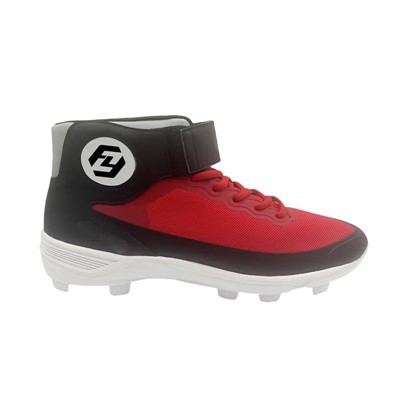
At the end of the day, sports are about having fun and staying safe, and the right equipment makes all the difference. Don’t let a sandy field derail your game—just pick the right cleats, adjust your play, and clean up afterward, and you’ll be good to go.
Baseball Cleats Reference:
- Journal of Sports Sciences. (2021). Footwear design for performance and injury reduction in beach team sports, 39(12), 1456-1472.
- National Federation of State High School Associations. (2022). Field surface and footwear guidelines for youth baseball, NFHS Sports Medicine Handbook.
- American Podiatric Medical Association. (2020). Athletic footwear recommendations for loose, uneven surfaces, APMA Consumer Guide to Sports Footwear.
Quanzhou Yangwang Trading Co., Ltd.
We’re well-known as one of the leading baseball cleats manufacturers in China. With abundant experience, we warmly welcome you to buy bulk customized baseball cleats from our factory. If you have any enquiry about cooperation, please feel free to email us.
Address: No. 234-1 East Qiguang Road, Handai Village, Chendai Town, Jinjiang City, Quanzhou City, Fujian Province.
E-mail: mariajose@quanzhouyangwang.com
WebSite: https://www.fuyingshoes.com/
